How to Set Up Your Trezor Using Trezor.io/start
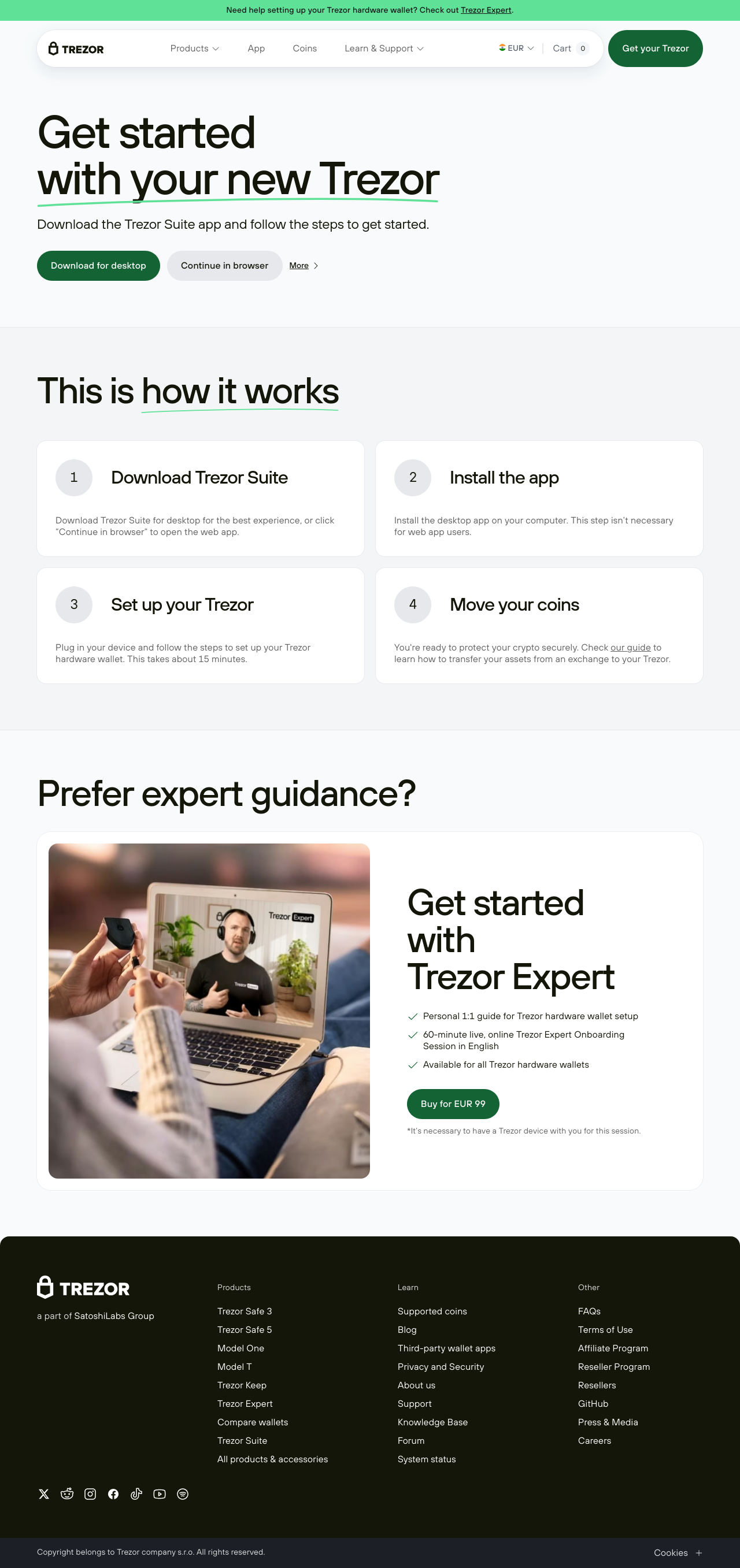
Below is the general sequence that you’ll find when you follow the official onboarding flow linked from Trezor.io/start.
1. Unbox Your Trezor Device
When you receive your Trezor, inspect the package for any tampering. Trezor devices come with security seals — do not use the device if seals are broken.
2. Visit the Official Onboarding Site
Go to:
This will redirect you to the official setup guide based on your device model.
3. Connect Your Trezor to Your Computer
Use the provided USB cable to connect your Trezor. Most current Trezor models use USB‑C.
Your browser may prompt you to grant access. Approve it to continue.
4. Install Trezor Suite or Web App
Trezor Suite is the official desktop and web interface for managing your wallet.
Download it from the official site:
Avoid third‑party download links — always use the official site. This ensures you’re not installing malicious software.
5. Initialize the Device
You will be prompted to:
- Create a new wallet
- Write down your recovery seed (typically 12, 18, or 24 words)
- Confirm words on the device screen
This seed is the only way to recover your funds if your Trezor is lost or reset. Store it offline and never share it.
6. Set a PIN
You’ll choose a PIN to protect the device itself. This adds an extra layer of security.
Understanding Your Recovery Seed
Your recovery seed is the most critical part of your Trezor setup. It’s a list of words generated by the device.
Best Practices
- Write it down on paper or a metal backup tool
- Do not store the seed digitally
- Keep it in a secure, private place
If someone obtains your recovery seed, they can access your crypto — even without your Trezor device.
Using Trezor to Send and Receive Crypto
Once setup is complete in Trezor Suite, you can:
- Receive crypto — generate an address and share it with the sender
- Send crypto — enter recipient’s address, amount, and confirm on device
Every outgoing transaction must be confirmed on the physical Trezor device for safety.
For official tutorials on transactions, see:
🔗 https://trezor.io/start
Supported Cryptocurrencies
Trezor supports a wide range of coins, including but not limited to:
- Bitcoin (BTC)
- Ethereum (ETH)
- Litecoin (LTC)
- Bitcoin Cash (BCH)
- Many ERC‑20 tokens
A full list of supported assets is available on the official site:
🔗 https://trezor.io/coins
Firmware Updates and Security
Trezor devices occasionally receive firmware updates that enhance security or add features. Always install firmware only through the official Trezor interface.
Never install firmware prompted by unknown websites or emails.
Safety Tips for Trezor Users
- Always use the official URL trezor.io/start
- Never enter your recovery seed online
- Beware of phishing sites resembling “Trezor”
- Use hardware security features like PIN and passphrase
Official support and FAQs:
🔗 https://trezor.io/support